From Muhammad Ali to Micheal Jackson, Parkinson’s disease has affected many lives and continues to affect more. And this rapid decrease in survival chances in Parkinson’s is due to the available treatment options; limited and toxic in the long run.
So, to combat this issue, meditative treatments like Audio-visual entrainment have been employed to improvise Parkinson’s symptoms. This audio-visual stimulation of the brain produces a relaxed state which helps in dopamine production and improves Parkinson’s symptoms.
But does AVE directly changes altered brainwaves in Parkinson’s? And does it influence all Parkinson’s symptoms? Let’s find out.
What is Parkinson’s Disease?
About 1 in every 500 people is diagnosed with Parkinson’s. It’s an incurable disease where the brain loses nerve cells in an area called the substantia nigra. And that’s the area where your dopamine cells are made, which are responsible for regulating your movement, memory, concentration, mood, attention, etc. So, when this ‘feel-good’ chemical depletes in the nervous system up to 80% or more, that’s when the person has Parkinson’s.
What Exactly Happens in Parkinson’s Disease?
No two patients can have the same set of symptoms in Parkinson’s. And the exact cause is never known. Experts say that genes and environmental factors like injuries have a specific role in causing Parkinson’s. However, here’s what a Parkinson’s patient mainly goes through:
- Seizures or involuntary body movement
- Muscle stiffness
- Slow motion or
And since dopamine is also responsible for giving pleasure and meditation, some patients go through anxiety and depression. Other symptoms include loss of smell, lack of sleep, memory, balance, etc.
Does Audio-visual Entrainment Work for Parkinson’s Disease?
Currently, Parkinson’s isn’t curable but treatable. And for years, patients have received treatments like LevoDopa medicine, surgery, and physiotherapy. But LevoDopa shows side effects after using it consecutively for 5 years, surgeries aren’t everyone’s choice, and physiotherapy requires commitment.
This is why a non-toxic and fast meditative treatment like Audio-visual entrainment has been tried and tested for Parkinson’s, which proved to be a better success.
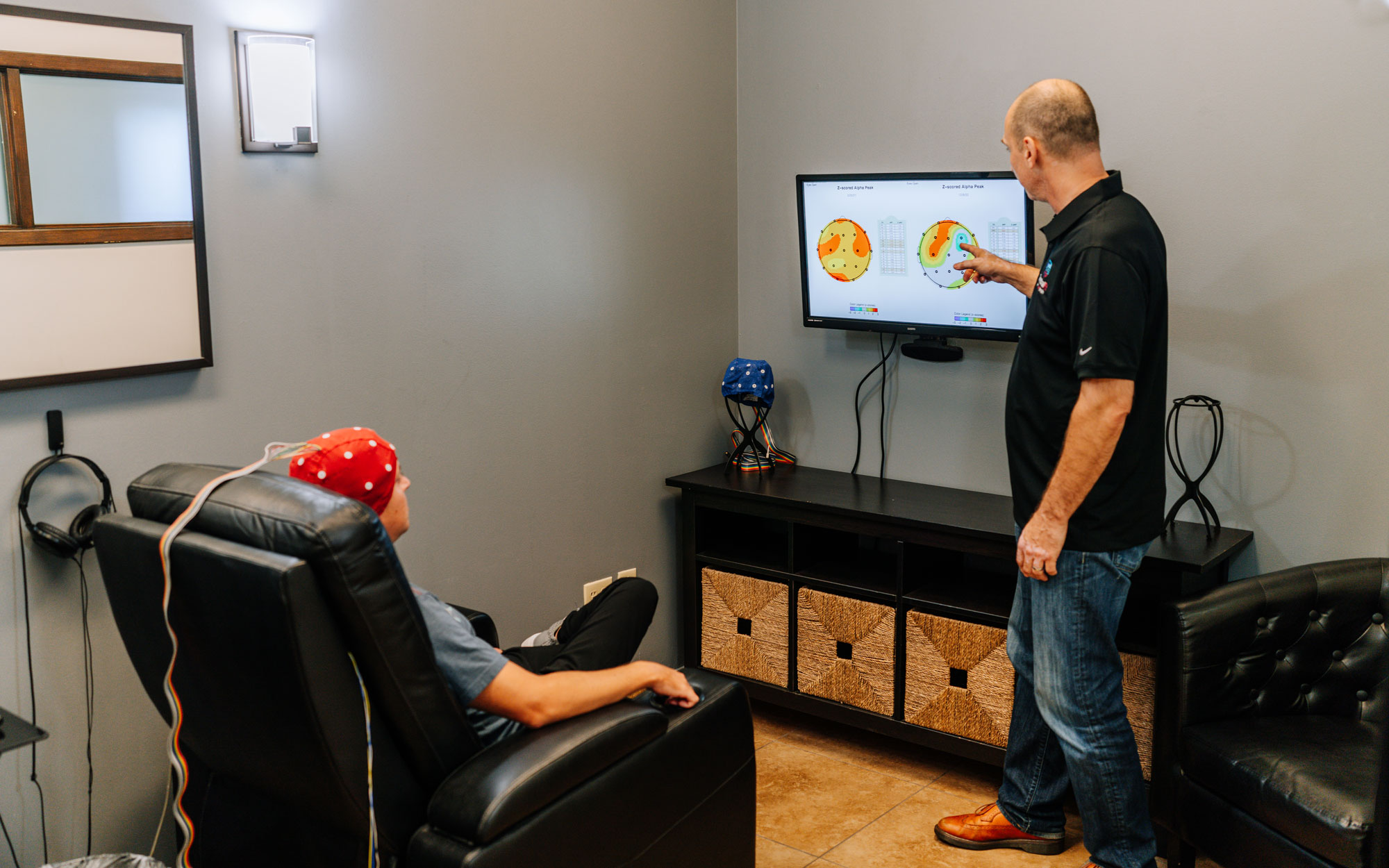
Through Audio-visual entrainment, we can regulate brainwave frequencies via audio (beats) or visual stimuli (light pulses) disturbed in disorders like Parkison’s. According to Brown news, beta waves having a frequency of 20 Hz are associated with Parkinson’s symptoms, including tremors.
So, we can correct these tremor frequencies by generating waves having reduced frequencies through audio-visual entrainment.
Studies That Support Parkinson’s Treatment With AVE
Multiple studies have been done to rectify the high tremor brainwave frequencies in Parkinson’s through brain wave entrainment. Here are a few:
In 2013, a study was done on Parkinson’s patients using audio waves having 10 Hz frequencies. The results showed that after hearing the tones, the participants experienced a reduction in the intensity of tremors without disappearing.
The AVE induced a relaxed state, occurring as a less-band width on the spectrum. And the researchers concluded that AVE improves tremors due to its meditative effect but has no direct influence on fixing the brainwave frequencies.
Another study showed how the short-term influence of sound waves like biaural, normalizes theta waves, Parkinson’s symptoms like memory loss, and electroencephalogram (EEG). And all these parameters are altered in Parkinson’s. This normalization was similar to the effect of medications, and hence AVE can be used as a co-treatment in improvising Parkinson’s brainwave activity.
The meditative state that AVE produces, takes the patient into a dissociative state, which enhances the release of chemicals like dopamine, and that’s where a Parkinson’s patient needs help.
The Bottomline
The studies done till now show that Audio-visual brain entrainment has a positive effect on improving Parkinson’s symptoms like tremors, altered memory, EEG, etc. However, there are limited pieces of evidence showing if AVE nullifies or corrects brainwave frequencies causing tremors and improves movement in Parkinson’s.
But since deep stimulation and meditation produces dopamine in the patient, AVE can be used as a valuable co-therapy for Parkinson’s. And if more studies are done, AVE can help in the dose reduction of medications causing side effects in the long run.