Life can be challenging for someone with attention deficit hyperactivity disorder (ADHD). As a mental health condition, it can cause difficulty with concentration, paying attention, impulsivity, restlessness, and more.
When not treated, ADHD can create challenges in a number of areas, including school, work, and home life. It can be diagnosed at an early age. ADHD is a brain disorder that affects basic life skills like sitting still, paying attention, or problem-solving abilities.
Statistics about ADHD in Children
- As per the survey, ADHD diagnosis increases with age. According to the survey, 2.4% of children between 2-5 years of age and 9.6% of children around age 6-11 are diagnosed with ADHD.
(Journal of the American Academy of Child and Adolescent Psychiatry, 2014 & 2018)
Statistics about ADHD in Teenagers
The following data represents the estimated percentage of adolescents with ADHD per age group:
- Ages 13 to 14: 8.8%
- Ages 15 to 16: 8.6%
- Ages 17 to 18: 9%
Statics About ADHD in Adults
The following data represent the acknowledged estimated percentage of adults with ADHD per age group:
- Ages 18 to 24: 4.5%
- Ages 25 to 34: 3.8%
- Ages 35 to 44: 4.6%
Symptoms That Can Help Diagnose ADHD
ADHD can not be prevented or fully cured. But early identification, professional help, good treatment, and a well-planned educational or business plan can help children or adults manage it and live a normal life.
Symptoms of ADHD differ according to age. For an accurate diagnosis, the DSM-5 lists 3 demonstrations of ADHD; Predominantly Inattentive, Hyperactive-Impulsive, and Combined. The symptoms for each are arranged and listed below.
Symptoms of ADHD in Children
- Inattentive/Attention Deficit: Easily distracted, unable to follow instructions, makes careless mistakes, forgets about daily tasks, loses things, daydreams, dislikes or finds organizing difficult, e.t.c.)
- Hyperactive-Impulsive: Unable to sit still, dislikes tasks that require sitting in one place, keeps moving, talks excessively, has trouble waiting for turns, squirms or fidgets, keeps wandering, unable to socialize well due to developed habits.
- ADHD Combined Presentation: The individual meets both the inattentive and hyperactive-impulsive criteria.
Symptoms of ADHD in Adults
- Anxiety and depression
- Mood swings
- Difficulty in socialization
- Trouble concentrating, staying organized or punctual.
- Addiction or substance misuse
- Low self-esteem
- Anger issues
- Easily frustrated and bored
- Procrastination
Causes of ADHD
After multiple research and experiments, scientists and researchers strongly believe that ADHD has a strong link to genetics. ADHD mostly runs in families and is passed down through the generations.
There are a few other factors that can cause or can increase the chances of having ADHD.
- Brain injury
- Changes in brain chemicals
- Poor nutrition, infections or drug abuse during pregnancy can lead to premature birth, low birth weight, and brain development. These factors can somehow increase the chances of developing ADHD.
- Excessive exposure to toxins such as lead during childhood can affect brain development, leading to ADHD.
How to Diagnose ADHD?
No single symptom or test can diagnose ADHD. Your doctor may refer you to specialists, such as a psychiatrist, psychologist, or psychotherapist. The diagnosis of ADHD may include the following steps:
- Keeping data of the medical and social history of the child and the family.
- Physical exam
- Neurological assessment may include screening the patient’s visual, auditory, verbal and all basic motor skills.
- A detailed evaluation by a professional may include testing for intelligence, aptitude, processing skills or personality traits. These evaluations are often conducted with the help of the parents and teachers if the child is of school-going age.
- A scan called the Neuropsychiatric EEG-Based Assessment Aid (NEBA) System measures theta and beta brain waves. Children and adolescents with ADHD have shown a higher theta/beta ratio.
- Quantitative Electroencephalogram (QEEG) and Event-Related Potentials ERP are the latest techniques that are also used for the assessment of ADHD.
How QEEG can Help in Diagnosing ADHD?
QEEG is a non-invasive technique that measures the brain’s electrical activity. It helps professionals to determine the degree of dysfunction in various parts of the brain. QEEG has been used extensively to diagnose and monitor ADHD in children, adolescents and adults. It helps to provide a reliable and objective assessment of the disorder.
For example, in a QEEG we might see a client has a slowed peak alpha frequency, this is correlated with certain brain functions like processing speed, the person may feel like they can not take in as much information at one time as they used to or it takes them longer to make decisions or retrieve a memory.
QEEG is used to evaluate the following:
- The presence of any abnormalities in the brain’s electrical activity
- The degree of dysfunction in various areas of the brain
- The impact of medications on the patient’s brain activity
- The effectiveness of treatments and therapies on the patient’s brain activity
Potential Treatments for ADHD
The treatment of ADHD requires a combination of methods. To some extent, symptoms of ADHD can be managed with therapy, while others may require medication. For the treatment of ADHD in children, a close collaboration between therapists, parents, teachers and doctors is mandatory. Special educational plans and schools are developed for children going through neuropsychological issues.
Adults may need ADHD coaching, which can help them develop work plans, stay focused and organized and manage anxiety and depression. Marriage counseling, family therapy, support groups or maybe a family talk can be helpful too.
The medication for ADHD includes:
- Amphetamine
- Dexmethylphenidate
- Dextroamphetamine
- Lisdexamfetamine
- Methylphenidate
Stimulant medications may not work for everyone with attention deficit hyperactivity disorder. Patients above 6 years of age may need non-stimulant medications such as:
- Atomoxetine
- Clonidine
- Guanfacine
In some cases, doctors may prescribe antidepressants.
There are some minor side effects of ADHD medicines, such as; anxiety, fatigue, loss of appetite, diarrhea, headache, sleep issues or irritable mood. These side effects can be improved by changing the dosage of medicines, or they may subside with time.
ADHD and Infrared Light Therapy: How Infrared Light Therapy Works?
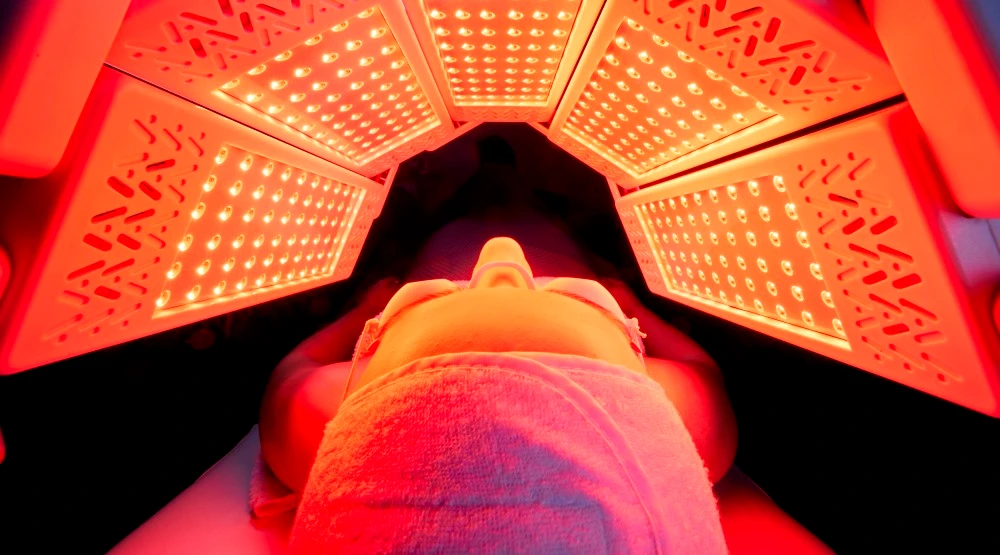
Apart from medication and therapy, Photobiomodulation therapy is a modern method for managing symptoms of ADHD to some extent.
This therapy includes transcranial brain stimulation using infrared light. It’s a non-invasive and safe treatment for many neuropsychological diseases. A human brain is a complex organ, and its power source is mitochondria. Mitochondria create fuel for the brain, thus also called the powerhouse of the brain. The performance of mitochondria can be improved by using infrared light of specific wavelengths. According to research, the brain’s mitochondria respond positively to energy wavelengths of around 810 nm to 1100nm. This range of energy is called near-infrared light energy (NIR).
During transcranial photobiomodulation, when NIR energy is delivered to the neuronal mitochondria using any infrared device, the light is absorbed by a light-sensitive enzyme known as cytochrome c oxidase. This enzyme initiates a series of biochemical reactions that benefits neurons and other brain cells.
Transcranial photobiomodulation heals damaged brain cells and regenerates them. It also helps to improve cerebral blood circulation and reduces inflammation and toxicity. In short, the ability of NIR light energy to be absorbed deeply into brain tissue improves overall brain health.
Pathways of Photobiomodulation
- NO (Nitric Oxide)
- ROS (Reactive Oxygen Series) → PKD (gene) → IkB (Inhibitor κB) + NF-κB (nuclear factor κB) → NF-κB (nuclear factor κB stimulates gene transcription)
- ATP (Adenosine Triphosphate) → cAMP (catabolite activator protein) → Jun/Fos (oncogenic transcription factors) → AP-1 (activator protein transcription factor stimulates gene transcription)
During transcranial photobiomodulation, mitochondria absorb near-infrared light energy and convert it into adenosine triphosphate(ATP) for cellular use. The increased adenosine triphosphate levels benefit our brain by diminishing inflammation. Increased ATP levels also stimulate cell regeneration and improve cell function. All these
Additionally, the process generates mild oxidants (ROS), resulting in gene transcription and cellular repair and healing. Moreover, this process also unclogs the chain, which is clogged by nitric oxide (NO). So, the nitric oxide is then released back into the system. Nitric oxide is a molecule our body produces to help its 50 trillion cells communicate. This communication happens through the transmission of signals throughout the entire body. Additionally, nitric oxide also assists in the dilation of blood vessels, which improves blood circulation resulting in better brain health.
Why Infrared Light Therapy is a Better Treatment Option for ADHD
Infrared light therapy has been proven to have many benefits on brain health. Additionally, it is a non-invasive and safe therapy. Photobiomodulation therapy using near-infrared light is a painless procedure. There are infrared light devices available in the market, allowing easy access to this therapy. The future of transcranial photobiomodulation seems promising because of its unlimited benefits and non-invasiveness. Still, infrared light therapy awaits further validation and support from solid, evidence-based research.
Author: Guy Odishaw NFP, BCST